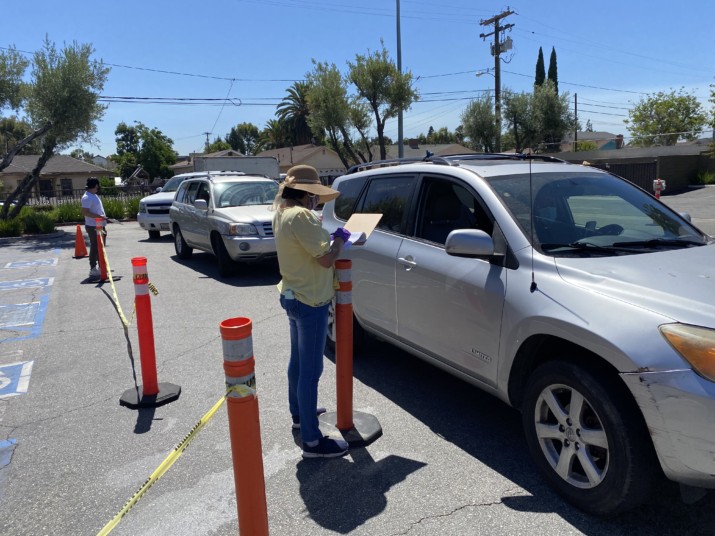
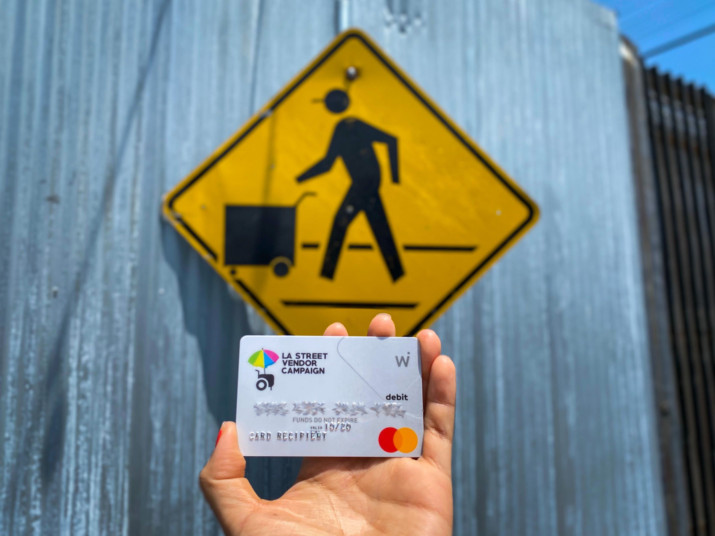
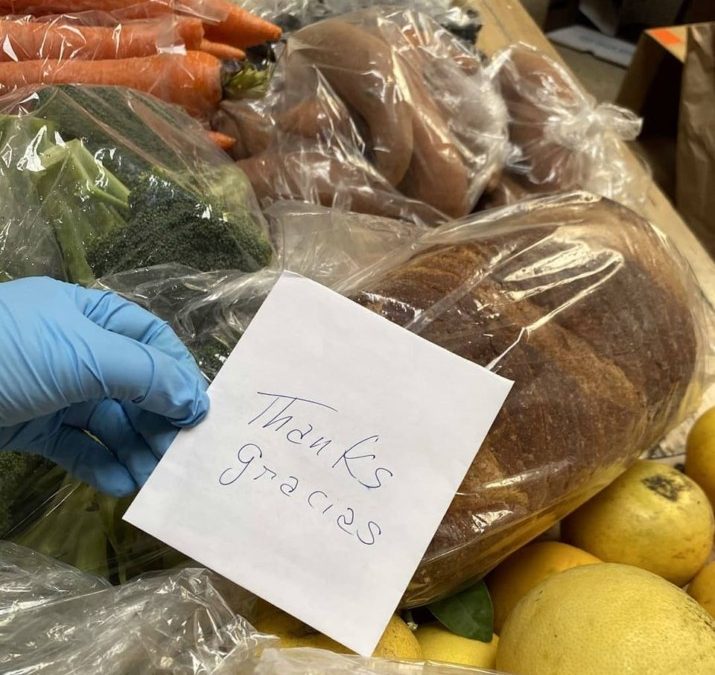
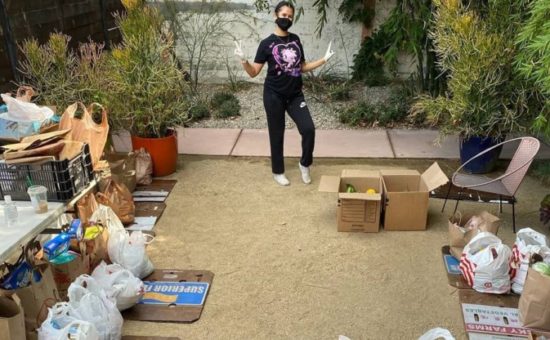
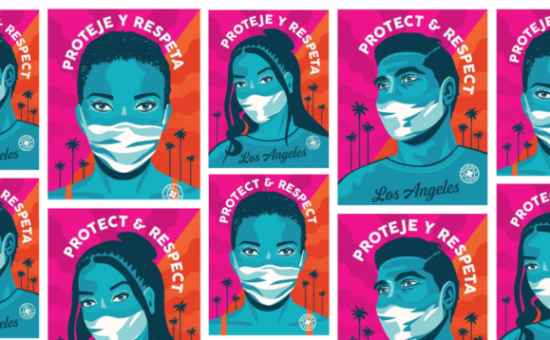
Los Angeles, CA. During the beginning months of the pandemic, Inclusive Action for the City has helped to provide immediate cash relief for small businesses and street vendors who were not eligible for government financial support. One hundred and twenty street vendors impacted by COVID-19 received $400 cash cards in early June through the Street Vendor Emergency Fund (see above).
For several decades, tens of thousands of street vendors have served the residents and tourists of Los Angeles despite the fact it was a criminalized practice in the city. It wasn’t until 2008 when they came together to legalize street vending with the help of the organizations that specialized in community development like East LA Community Corporation (ELACC).
Cash Cards for Street Vendors were much appreciated.
As street vendors started working with nonprofits, the Legalize Street Vending Campaign: Leadership for Urban Renewal Network (LURN) was created and focused on advocating for low-income communities, primarily concentrated with small businesses.
It wasn’t until a decade later that the long-term efforts of LURN and other committed communities paid off. Street vending became legal in November 2018, and low-income entrepreneurs were able to take control of their businesses and take care of their families without risking their livelihood.
“Inclusive Action is a lender, we provide small business loans to entrepreneurs,” said Inclusive Action’s executive director Rudy Espinoza, “many of our clients are street vendors, and they were coming in already anticipating that they were not going to be able to make their payments.”
Street vendors are not generally eligible for small business relief funds or other forms of government-sponsored financial support. Espinoza and his team were aware of this and heavily discussed in mid-March whether or not they should provide loans to those who were struggling with the quarantine. However, Inclusive Action decided against this action.
“We should not be doing loans to people right now that are struggling, but we need to get people cash,” Espinoza declared.
It was decided that the best way to help street vendors immediately was to distribute $400 cash cards (seen above) that could be withdrawn and used however the individual chooses. The decision allowed for the creation of the Street Vendor Emergency Fund with the collaboration of ELACC and Public Counsel.
1,032 street vendors were given immediate relief with the fund over the summer but Espinoza believes its “a drop in the bucket” to the much larger systemic issue of street vendors not being eligible for government benefits and having to rely on nonprofit organizations for relief during the pandemic.
“There should be more systems to protect vendors and take care of them during pandemics,” Espinoza said, “and the fact of the matter is that many of them have been struggling for a long time.”
There is hope for vendors to receive more immediate relief and support by the city as the Sidewalk Vending Pilot Program was recently passed by the LA County Board of Supervisors which will invest $1 million in assisting vendors with health-compliant equipment, education outreach, and other needs that will allow street vendors to safely sell in unincorporated areas of Los Angeles.
If you have the means to donate to Inclusive City for the City to continue working to help street vendors, click here.
From Inclusive Action for the City:
Inclusive Action addresses the root causes of poverty by merging good urban policy with sound economic development initiatives that reduce barriers, increase opportunity, strengthen local economies, and empower low-income residents and entrepreneurs across Los Angeles.
Our programs and initiatives seek to uplift those who face the most obstacles to social and economic opportunity. Inclusive Action empowers communities by prototyping innovative, scalable solutions that seek systems change, generating models that can be replicated and applied to all types of urban environments.
Los Angeles, CA. Executive Director Alexandra Suh (seen above) of KIWA (Koreatown Immigrant Workers Alliance) has announced in July of the organization’s support for establishing Public Health Councils in LA workplaces in an effort to prevent the spread of COVID-19.
As coronavirus cases continue to increase in LA, the LA Board of Supervisors approved a motion on July 21 that would allow worker-led health councils to be established to help monitor the safety of active workplaces.
The Department of Public Health in LA County were quickly overwhelmed with enforcing citations on businesses that did not follow the guidelines. With nearly hundreds of citations and thousands of more businesses to monitor, another proposal arose in September for the Board of Supervisors. for worker-led public health councils was announced to the LA Board of Supervisors with one major upgrade of allowing third-party organizations to assist in education,
The organization’s foundational focus was to address “worker exploitation” among Koreatown workers.
Koreatown is known as the densest neighborhood in Los Angeles with populations predominantly made up of Koreans and Hispanics. The average income is comparably low to the rest of the city and the nonprofit started to bring these issue in the forefront of the LA Board of Supervisors.
KIWA began its mission by compensating Korean and Hispanic workers and business owners who were affected by the damages from the aforementioned civil unrest in 1992.
After nearly three decades KIWA continues to strongly campaign for a variety of city and neighborhood issues aimed to help disadvantaged working populations. addressing gentrification, ICE raids, and underpaid immigrant workers.
Members of KIWA walk in solidarity with BLM during the nationwide protests against police brutality in late May.
Recently, the organization has teamed up with other nonprofits to advocate and organize public health councils to monitor the health and safety of workers. The policy proposed to the LA Board of Supervisors would help monitor any instances of violation of CDC guidelines in the workplace and would be reported to the Department of Public Health to help prevent the spread of COVID-19 to LA citizens.
It is important to note that Los Angeles cases are increasing daily with roughly 1,000 more each day in the city alone as “pandemic fatigue” continues to settle in. The Public Health Council website has a counter of the numbers of cases updated every few days.
KIWA has a history of supporting causes that affect the city of Los Angeles and its county. The Healthy LA Coalition is one example
From KIWA: Workers for Justice:
Koreatown Immigrant Workers Alliance (KIWA)’s mission is to empower Koreatown’s immigrant workers in low-wage industries for dignity and respect in the workplace and community, and to work together with other communities to realize a vision of a just Los Angeles. One of the nation’s most established workers centers, KIWA is one of few community groups organizes both Korean and Latino workers. Our vision is to bring together workers, community members, and students in a broad, multi-ethnic coalition.
Los Angeles, CA. LA Más consists of a small team that made a huge impact with the neighborhood of Northeast LA (NELA) through a food support program (seen above), partnerships with other organizations, and continuous communication with residents.
The non-profit is organized by a group of seven people who prioritize promoting projects that help to elevate working-class communities and people of color since its foundation in 2012.
Program Manager Alexandra Ramirez explained that “before COVID-19, we had two major programs” that the team primarily focused on. The Backyard Homes Project allowed homeowners to construct an Accessory Dwelling Unit (ADU) in exchange for providing affordable housing to a Section 8 voucher, and Storefronts, LA which focused on “developing storefronts redesigned for small business owners.”
The ADU project and Storefronts, LA regularly had in-person meetings with multiple people, which could not continue as phase one of quarantine began in mid-March. “We were in the midst of doing about three or four designs,” said Ramirez, “so that had to stop.”
For the next two weeks, Ramirez and her team started checking in and getting advice from local non-profits about how to best serve the community during the shutdown. It was in these conversations that LA Más and its local partners started to note “this informal phone tree that was happening” between residents of NELA checking in with their neighbors about how they could help during the pandemic.
“And that’s when we started realizing that we could do more of those check-ins,” said Ramirez, “we didn’t know how much more we could do so we really needed to rely on our volunteers.” (seen below)
An Excel spreadsheet was created by the LA Más team and was made up of the contact information of about two thousand residents. They began contacting people on their spreadsheet in order to best understand their current needs.
“We knew that we couldn’t be the only ones making these calls and checking in with residents and that’s when we opened it up to our volunteers,” Ramirez said, “and we started training them to make calls and, yeah, we went on from there.”
After about a week of over 150 volunteers talking to residents, LA Más found that the highest needs were primarily with food and information on financial and social issues that arose during the pandemic.
Grocery sponsorship allows struggling families to be able to eat fresh food through deliveries made by LA Más volunteers. Photo credit: LA Más Outreach Lead Liliana Sánchez
In mid-April, the Northeast LA Community Response was announced on LA Más’s social media pages as an initiative to help community members gain immediate relief. Requests could range from deliveries of activity kits and face masks to information on unemployment filings and mortgage payments.
“We kept seeing how food insecurity really was so present in our community, so we have been running offshoots of that program [NE LA Community Response] ever since,” Ramirez explained.
For the rest of the summer, LA Más operated a temporary food support program, where volunteers delivered donated and sponsored grocery bags for families in need on a weekly basis.
When discussing what Ramirez hopes for in the future when the coronavirus may not be as much of a centralized issue, she said, “We really need to address the systemic issues that are impacting working-class communities of color in our neighborhood.” She continues to explain immigrant families in particular “had a really hard time getting the support they needed.”
“Really, our goal is to continue to work in addressing those underlying issues, and figuring out how do we support our community and make these issues more visible,” Ramirez concluded.
LA Más is currently focused on reinventing its mission statement and posted a week ago that:
“For the rest of 2020, we are doing ‘fieldwork’ around the priorities that community members helped us identify: housing stability, economic development and food access, to name a few. We’ll be partnering with neighbors to identify what local solutions already exist and explore where new infrastructure could be helpful.”
If you have the means to donate to LA Más to continue giving to the community or are interested in becoming a volunteer, click here.
Photo credit for the first image: Russell Horning
From LA-Más:
LA-Más designs and builds initiatives that promote neighborhood resilience and elevate the agency of working class communities of color. We envision a Northeast Los Angeles where communities of color have equitable access to the power and resources needed to shape their futures.
Los Angeles, CA. The Life Group LA is a highly praised, group-oriented non-profit that gives immense support to those affected by HIV/AIDS through emotional support groups and weekend-long seminars. It has recently adjusted to providing weekly zoom sessions and webinars amidst the pandemic due to the extreme risk of volunteers and clients catching the COVID- 19 virus by attending physical group gatherings.
Life Group LA is a volunteer-driven organization that primarily focuses on its program, known as The POZ Life Weekend Seminar, where HIV-positive individuals and their loved ones can come together to learn more about living with HIV through educational workshops and emotional support groups. There is no cost for those who apply for the seminars or support groups as the organization relies purely on donations in order to cover costs.
Life Group LA’s latest seminar had been scheduled to take place in Las Vegas on March 28-29 of this year. However, since the pandemic hit the United States, the program had been postponed until group gatherings are considered safe by medical professionals.
Despite the fact that Life Group LA primarily works with groups of people in public spaces, executive director Sunnie Rose and the organization’s volunteers decided to continue its essential goals in giving the HIV community the emotional support and encouragement they need through webinars and monthly fundraising drawings.
Click here for more recorded webinars like the one seen above.
Life Group LA has more than fifty-one presenters that volunteer their time to help educate the HIV community on topics as mentioned above. Several of the volunteered presenters are medical professionals, college professors, and multimedia artists.
Sunnie Rose, the executive director of Life Group LA, described the organization as special because it “brings people out of isolation and out of fear” and “gives them the joy and the happiness that they so deserve in life.” Now, more than ever, Life Group LA is continuing to provide support for the HIV/AIDS community and beyond during the unprecedented times of the coronavirus pandemic in the United States.
From Life Group LA:
If you have the means to donate to Life Group LA in order to continue to provide free services for their clients and community, click here.
Life Group LA is a powerful coalition of people focused on the spiritual, emotional and physical well-being of people living with HIV and those who support them through education, empowerment and emotional support. Our work is to assist people so that they may make informed choices and decisions regarding their healthcare and personal well-being.
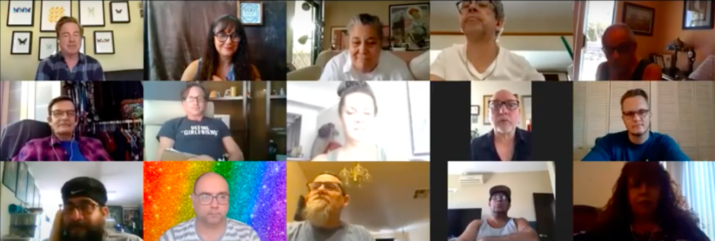
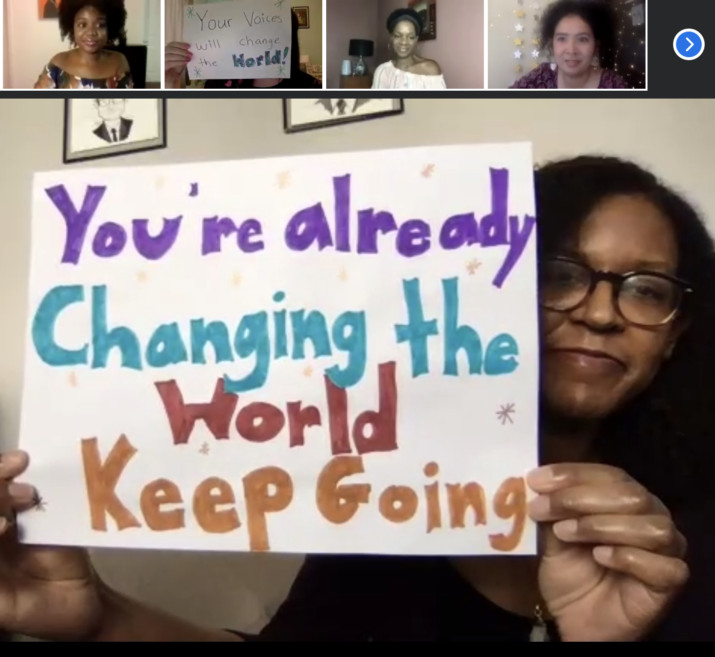
Los Angeles, CA. The WriteGirl mentoring program has taken to zoom this summer and seen some unexpected benefits. Every year, the LA-based nonprofit matches over 500 girls with mentors; it also provides workshops and college guidance. WriteGirl has managed to keep its participation numbers high during the pandemic as girls who had transportation issues found it easier to be online. The organization boasts a thriving volunteer community with over 200 volunteers working as mentors, college counselors, and volunteers in the nonprofit’s program helping young women who are incarcerated.
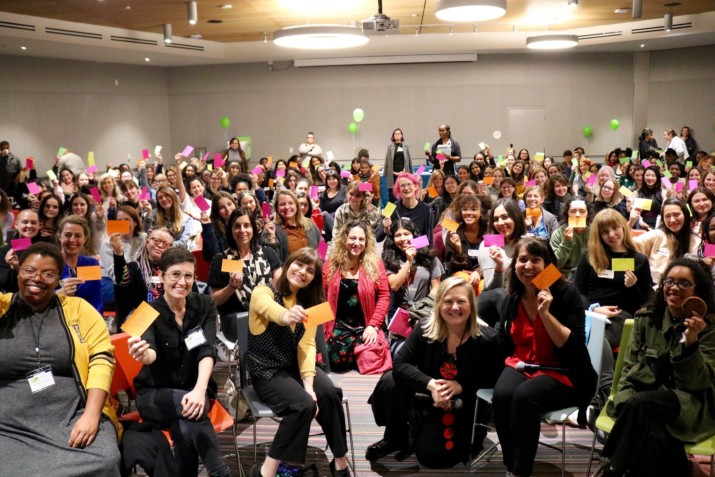
WriteGirl Poetry Workshop at Otis College during pre-covid days.
Ever since the shift to Zoom in March, WriteGirl has faced new challenges and introduced innovative tools and activities. Program coordinators lament the fact that not all of their students are staying connected. Keren Taylor, the executive director of WriteGirl, explains, “We don’t know the reason, is it the tech divide or family? Sometimes our young people don’t come forward to tell us what is going on because of stress or family conditions.”
Taylor noted that volunteers are equipped with new online tools to engage students and to be more empathic. “We work with many students of color, who are struggling with the protests.” She explains that “the strangeness of our governmental response” has put a strain on students of color. “Add that to a mix and you really have a volatile situation for those girls, this is why we added self-care tools like exercise, going to bed early, and eating properly.”
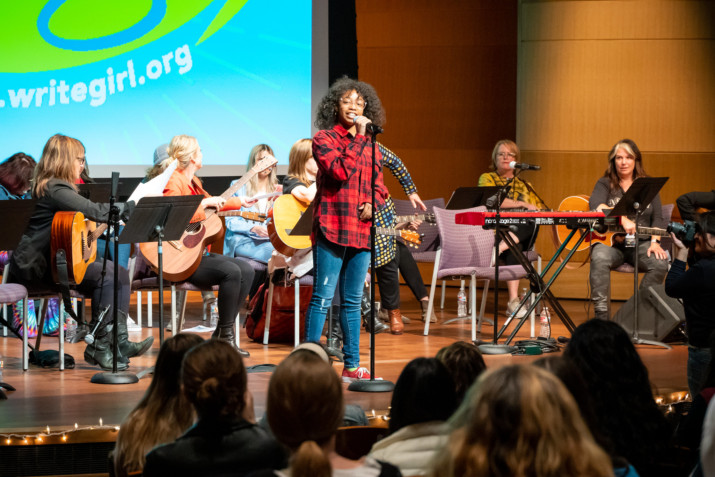
A previous WriteGirl Songwriting Workshop
WriteGirl was launched in December 2001 to bring the skills and energy of professional women writers to teenage girls who do not otherwise have access to creative writing or mentoring programs.
WriteGirl is facing unforeseen expenses from tools such as Zoom and other needed software. On top of that, Taylor anticipates seeing the impact of COVID-19 on their fundraising programs over the next three to four months. “We expect it to be a very hard time,” said Taylor.
Another looming challenge to WriteGirl is the changing nature of education. “People used to come away energized from our meetings being part of the culture, society, and nature,” Taylor said. “Looking ahead, we’re facing zoom fatigue because everything is online including friends and school.” Taylor understands that her organization may not be the same but she believes it’s important to focus on their strengths, “our strength is in the depth of our training and the impact of our volunteers.” WriteGirl doesn’t plan to sit idle and is conducting surveys and initiating one on one calls with the participants to see how they’re being affected.
Taylor understands says the COVID-19 pandemic presents more challenges, but the nonprofit must continue giving young women something they can’t get anywhere else. “We might be in a pandemic right now but 10 years from now, those young people we’re training will be the ones saving us,” she added.
From WriteGirl:
Within a community of women writers, WriteGirl promotes creativity and self-expression to empower girls.
WriteGirl is a Los Angeles-based creative writing and mentoring organization that spotlights the power of a girl and her pen. At WriteGirl, we match girls with women writers who mentor them in creative writing. WriteGirl is a thriving community with 200 volunteer women writers serving more than 500 girls annually. Every year, we produce dozens of workshops, panel discussions, and special events to help girls get creative, get through high school, and get to college! In fact, since 2001, 100% of our graduating seniors have entered college, many on full or partial scholarships.
Through one-on-one mentoring and monthly creative writing workshops, girls are given techniques, insights, and hot topics for great writing in all genres from professional women writers. Workshops and mentoring sessions explore poetry, fiction, creative non-fiction, songwriting, journalism, screenwriting, playwriting, persuasive writing, journal writing, editing, and more.
Los Angeles, CA. 105 thousand citizens of Los Angeles County have received help from the Mayor’s Fund for LA to do things like buy food and pay rent. FamilySource Centers also provided $1.2 million in grocery gift cards to nearly 10,000 Angelenos and all cards distributed in 3 days.
The amount of money on the debit cards varied from $700 to $1,500 based on an applicant’s financial and economic situation.
The Angeleno Card Program indiscriminately assists the undocumented workers and unhoused residents of the city as it is designed to randomly select a validated applicant for the prepaid debit card.
“We are helping America’s cities fill critical gaps left by the federal response to the economic devastation caused by the pandemic,” said Garcetti in an Accelerator for America press release. “Immigrants and domestic workers are essential to our economy and our communities, and we will not get through this pandemic by leaving people behind.”
The Mayor’s Fund for Los Angeles is a non-profit organization dedicated to improving life for all Angelenos. Uniquely positioned at the crossroads of local government, business, philanthropy, and the non-profit sector, the Fund facilitates the communication and collaboration vital to solving Los Angeles’ most complex challenges.
By leveraging the power of institutions and experts from across the city, the Fund helps create partnerships with the power to transform Los Angeles, making it a world leader in economic prosperity, efficiency, sustainability, and quality of life for all of its residents.
The Fund selects programs on the basis of their ability to engage public and private resources, demonstrate collaboration, seek innovative solutions, and yield measurable, transformational impact.
The Fund is supported by private donations and is overseen by an independent Board of Directors.
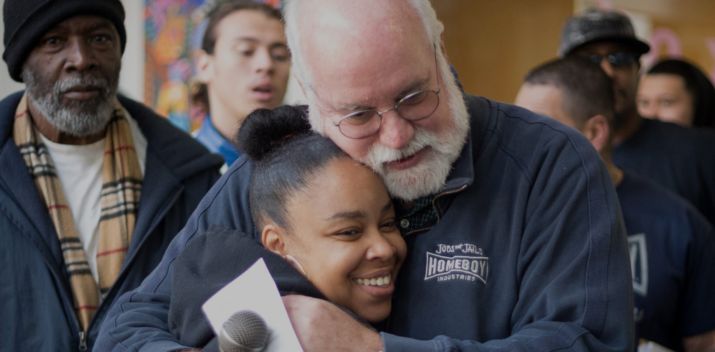
Los Angeles, California. The Conrad N. Hilton Foundation announced that the LA organization Homeboy Industries is the recipient of the 2020 Humanitarian Prize on August 3rd. This gives the nonprofit 2.5 million dollars to use as it wishes.
Homeboy Industries has worked to help rehabilitate men and women who have been affected by gang violence or have been previously incarcerated.
According to Homeboy’s website: “Each year over 10,000 former gang members from across Los Angeles come through Homeboy Industries’ doors in an effort to make a positive change. They are welcomed into a community of mutual kinship, love, and a wide variety of services ranging from tattoo removal to anger management and parenting classes.”
Here’s a video about the honor:
As of August 2020, the Conrad N. Hilton Foundation has awarded 36.5 million to various nonprofit organizations.
President and CEO of the Conrad Hilton Foundation, Peter Laugharn spoke on the decision to choose Homeboy Industries.
“The Jury’s selection of Homeboy Industries as the recipient of the 2020 Hilton Humanitarian Prize speaks to the power of standing with people who have been systemically marginalized, creating space for them to heal and invest in their future, with the intention of ending the socio-economic inequities that impact communities. A tremendous example of ground-breaking humanitarian work right here in Los Angeles, its community-led approach has spawned and supported a global network of over 300 organizations. Homeboy Industries embodies the spirit of the Prize and the work of the Foundation — focusing on equity, resilience, and dignity — in an inspiring way.”
To help Homeboy Industries you can donate directly on its website, or you can buy merchandise, food, supplies, and more that will contribute to the organization.
From Conrad N. Hilton Foundation:
The Conrad N. Hilton Foundation is a family foundation established in 1944 by the man who started Hilton Hotels. We provide funds to nonprofit organizations working to improve the lives of individuals living in poverty and experiencing disadvantage throughout the world.
Los Angeles, CA. The Saban Community Clinic, with five sites located throughout Los Angeles, has worked hard in ensuring that its patients receive accessible healthcare during the global pandemic of COVID-19.
“We all need to unite and we all need to make sure that we’re there for each other mentally,” said Josue Portillo, Lead Front Desk Specialist from the Saban Beverly Health Center. Portillo discussed the difficulties that the staff has faced in keeping their doors open for vulnerable communities in Los Angeles, as well as the state of the regular services provided by the clinic.
The priority for Saban Community Clinic is to keep as much of their services open for those in need with as little risk as possible. Portillo talked about how they switched from “face-to-face contact” for regular appointments and results to “100% phone conversations” with patients when COVID-19 cases first began to emerge in California.
Saban Community Clinic today prioritizes all contact with patients to be over the phone. However, in the cases where blood work or any other type of screening is needed and approved by a patient’s doctor over the phone, Portillo and the Beverly Clinic’s staff will sanitize all areas patients may come in contact with before and after they come into the clinic.
Communication and Marketing Specialist Valeria De Luna commented on how important it is to keep “preventative services” open during the pandemic “regardless of how long this takes,” which includes screenings for STIs and pre-scheduled vaccinations for children. “That’s the biggest thing for us is making sure that we keep our community healthy from other things as well,” De Luna said, “and just making sure that those needs are addressed.”
The Free Shower Program is a regular service provided by the Saban Clinic to help individuals struggling with homelessness to receive access to a shower, a free toiletry kit, as well as other beneficial services provided by the clinic.
The program will continue to be open for these patients during the pandemic under strict limitations, which Portillo said was a bit difficult to enforce in comparison to their other services. “We are trying to provide the same services and keep our doors open for them because we know that they are very vulnerable in the community,” said Portillo.
“In the beginning,” Portillo said, “We worked hard for them to understand that we were limiting the amount of people in the building.” The Beverly Clinic currently only allows two unhouse patients participating in the program to come into the building at a time. They will be put into a room where they can charge their phone or organize their belongings for half an hour, fifteen minutes to take a shower in the facility, and then ten minutes to gather their belongings and leave the building so the staff can “sanitize the whole area before the next patient comes in.”
There are also tents outside of the entrances that provides shade and some care (seen in the picture above) while the unhouse patients wait their turn for the shower program.
De Luna commented on how their unhouse patients often do not have easy access to information on the Coronavirus or mobile devices to do a phone/video conference before going into one of the clinics in Los Angeles.
“There are all these different things that our patients have barriers to and so we really have to understand that our patients are coming from a really different perspective,” De Luna said, “we are really being that source for our community and providing them that outlet for them as well here.”
Portillo continues to help answer questions and concerns from individuals who have limited access to essential information on the pandemic and take care of patients who have to come into the clinic.
“All of our staff members’ encouragement for each other has really allowed us to push each other and support each other and make sure that these things can continue on a daily basis,” Portillo concluded.
If you would like to help Saban Community Clinic to continue providing these important services to the Los Angeles community during this difficult time, click here to donate to their emergency fund.
Click here for more videos about the clinic’s work during the pandemic.
From Saban Community Clinic:
The Saban Community Clinic was founded on the principle that healthcare is a right, not a privilege. Our clinics provide Whole Person Care to everyone regardless of income or immigration status. This includes medical, behavioral health and dental care.
For over 50 years, we have been redefining community health through a systemic approach that creates a lasting impact on individual lives and creates healthier communities. We have been awarded the National Committee for Quality Assurance (NCQA) Patient-Centered Medical Home (PCMH) Recognition Level 3, a model that puts the patient first.
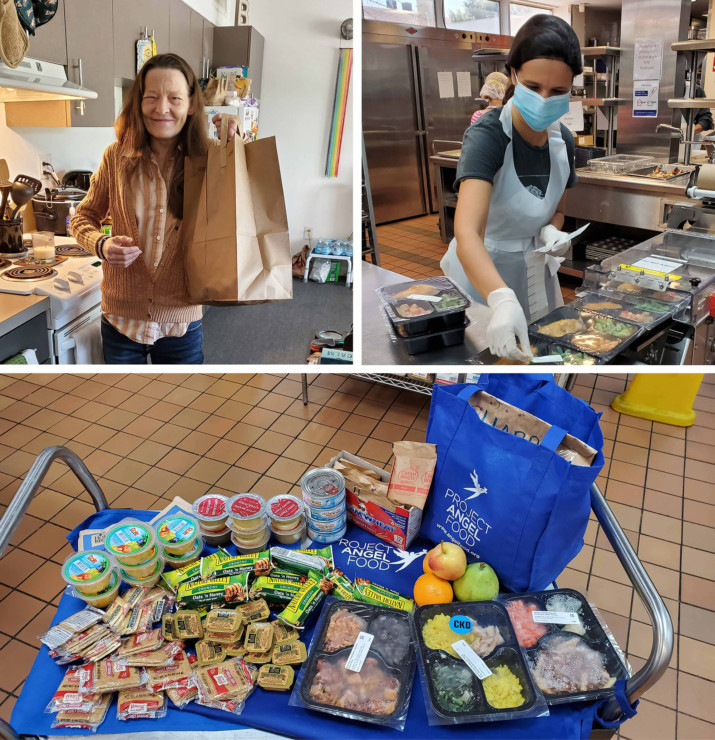
Los Angeles, CA. Facing a global pandemic, Project Angel Food needed to rise to the occasion. Richard Ayoub, the executive director of Project Angel Food explains the COVID-19 “forced rapid growth. We had no time to do it, we just had to do it.” The nonprofit was created in 1989 amidst the HIV pandemic as a small kitchen to deliver meals and fight malnutrition in the HIV/AIDS community. Today, the project boasts an 8000 square feet organization serving many other life-threatening illnesses. It was ready to help alleviate suffering from COVID-19.
Staffers say Project Angel Food targets some of the most vulnerable and isolated communities where 62% of its clients are over the age of sixty and 50% are living alone.
In the kitchen, staffers introduced plexiglass, contact-free deliveries, and over 13,000 facemasks to volunteers and clients. “If you build the project, the money will come and clients will come. Within five months, we had 7000 donations! Twice as many as last year because people care about other human beings.” Ayoub added.
Richard Ayoub stepped away from the entertainment business to lead this project. As he put it, “I received the call. And I answered it.” He believes that his organization was born for this pandemic, as it was created “in response to the AIDS crisis when we started sending love in the form of food. Now we’re in the middle of another pandemic so we’re continuing our mission,” Ayoub said. “Everyone is trying to get back into the office, and I never left my office” he added.
Richard Ayoub, executive director of Project Angel Food.
Every year, Project Angel Food turns its parking lot to a gala fundraiser called Angel Awards. This fundraiser has hosted a number of celebrities such as Elizabeth Taylor and Adam Lambert. Last year, the nonprofit raised a record $900,000, far exceeding its target goal of $700,000. Due to the COVID-19 pandemic, administrators resorted to a telethon on television. When comparing online donations to the telethon Ayoub explained, “If you talk to a human and make the call, you have a story and a connection and you get to tell that story and get that fulfillment in your heart. We forget that the donors have their own stories.” The livestream of the show can be found on KTLA’s Facebook page and Project Angel Food’s website…and it’s still possible to donate by texting LOVE20 to 50155.
As social distancing guidelines strengthen, Project Angel Food started noticing “their clients feeling more isolated and in need of an extra human touch” Ayoub said. Especially “our clients with COVID-19 are the ones who feel ostracized and it reminds us of the people who have AIDS”, he added. In response, Project Angel Food started a new program called Telephone Angeles where volunteers call the clients to check on their medical and mental health. Keeping volunteers and clients both engaged in the process. Ayoub himself is part of the program, “I was on the phone for about 45 minutes with one client,” he said. “He told me about his problems walking and his wife’s Parkinson’s disease, his wife is also a client”.
Food tray by Project Angel Food.
With all fundraisers canceled for the year, donations were critical for the 30-year organization to continue serving healthy meals to 2,100+ people a day with critical illnesses who are even more vulnerable because of COVID-19. The clients pay nothing for these medically-tailored meals and Project Angel Food is on track to deliver 1.4 million meals in 2020.
From Project Angel Food:
Project Angel Food is the loving neighbor who knows that food is medicine, food is love, and food nourishes the soul. We believe no one fighting critical illness should go hungry, which is why we personally deliver, with care and compassion, free medically-tailored meals, handmade with healthy ingredients to those in our community who are hungry and alone.
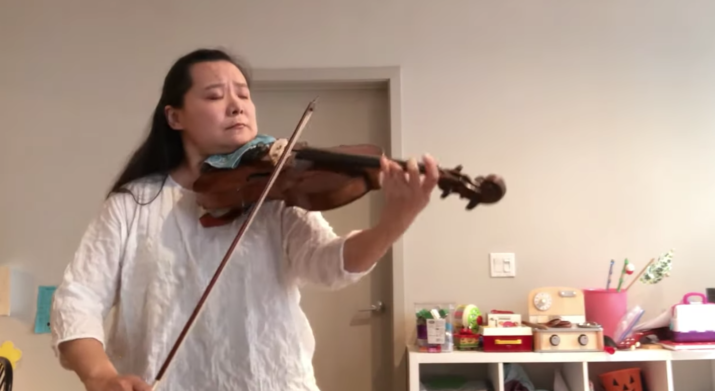
Los Angeles, CA. Philharmonic fans can listen online to their favorite musicians, but due to the continuing COVID-19 crisis, all LA Phil concerts at Walt Disney Concert Hall have been canceled. Dozens of performances from the Opening Night Concert & Gala on September 22nd up until New Year’s Eve with Pink Martini. Philharmonic leaders wrote this about the cancelation: “While this news may not be surprising given the events of the past few months, it is heartbreaking, nonetheless. Sharing in the communal experience of live music is at the heart of what we do, and we know it is a vital part of your life too.”
Even though the performances are canceled, the LA Philharmonic is finding a way to connect with supporters. Including
From LA Philharmonic:
Subscribers
As a result of the fall cancellation, we have moved all 2020/21 subscription packages into the 2021/22 season. This will enable subscribers to keep their seats when we return for a full season of music back at Walt Disney Concert Hall. We anticipate sharing the 21/22 season programming with you in March 2021. Subscribers can also choose to donate, create an account credit or refund. Learn more here.
Create Your Own Package
Tickets for impacted concerts in your Create Your Own Package can be donated, returned for credit or refunded.
We are here to answer any questions you may have and guide you through this process. Please contact us by email at information@laphil.org or by phone at 323 850 2000 between 10am and 6pm Monday through Friday. Due to heavy phone volume and reduced staff, we encourage you to contact us by email to avoid experiencing longer than normal wait times.
NONPROFIT BENEFIT TICKET GIVEAWAYS!
Sign up for our free weekly highlights for the chance to win two tickets terrific nonprofit events! If you “like” us on facebook, or sign up for our weekly news highlights, you’ll be entered to win! Sign up today!
Look for another ticket giveaway soon! Are you a nonprofit looking to bolster your publicity with facebook and tweets? Email us and we’ll run a contest with tickets to your event! info@societypage.net